

Meet The Team
Prof. Eitan Okun, Ph.D.
Principle Investigator
Prof. Eitan Okun is a Full Professor and Vice Dean for Research Resources Development at the Mina and Everard Goodman Faculty of Life Sciences at Bar-Ilan University. He is also affiliated with the Gonda Multidisciplinary Brain Research Center at Bar-Ilan University. Prof. Okun completed his postdoctoral training with Dr. Mark P. Mattson at the Neuroscience Laboratory of the National Institute on Aging, part of the National Institutes of Health (NIH). He earned his PhD in Immunology and MSc at Bar-Ilan University and graduated with honors in Biology. Throughout his career, he has led and collaborated on numerous Local and international research initiatives.
Prof. Okun is a neuroimmunologist whose research focuses on how immune processes, biological sex, and pregnancy interact to influence cognitive decline in Alzheimer’s disease and Down syndrome-associated Alzheimer’s disease. His work aims to develop vaccine-based and immune-targeted strategies to delay disease progression while investigating female-specific biological mechanisms, including fetomaternal communication, microchimerism, and maternal cognitive changes following pregnancies involving a fetus with Down syndrome. His overarching goal is to advance neuroimmunology toward personalized prevention and therapeutic approaches for neurodegenerative diseases.


Lab Members

Ravit Madar, Ph.D
Lab Manager
Oversees and coordinates the laboratory’s day-to-day operations, ensuring that all experimental workflows run smoothly, efficiently, and in full compliance with institutional and safety regulations. Manages laboratory logistics, equipment maintenance, procurement, and organizational infrastructure while supporting researchers and trainees in maintaining high standards of accuracy, quality control, and operational excellence.
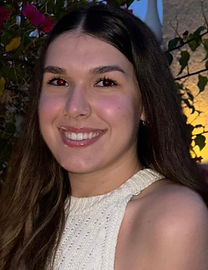
Rachel Prasanakis
Research coordinator
Coordinates and oversees the lab’s research operations, scientific communications, and strategic initiatives, ensuring seamless execution of projects from experimental planning to grant submissions and collaborations. Facilitates interdisciplinary partnerships, manages administrative and regulatory processes, and supports trainees and investigators to advance the lab’s scientific mission.

Angel Fiomi
Animal Facility coordinator
Supporting ongoing projects focused on neuroinflammation and amyloid-β pathology in Down syndrome and Alzheimer’s disease across different transgenic mouse models. This entails conducting behavioral assessments, genotyping, and assisting in evaluating therapeutic interventions targeting cognitive decline.

Sophie Shirenova, Ph.D
Postdoc fellow
My research explores how gut-derived IgA and adaptive immunity influence microglial responses and amyloid accumulation in Alzheimer’s disease. By integrating mouse genetics, microbiome analysis, and human single-cell datasets, I seek to identify immune mechanisms that could be leveraged to modify disease progression.


Dolev Michaelovich
Ph.D student
My research focuses on the mechanisms underlying Alzheimer’s disease in individuals with Down syndrome, who develop Alzheimer’s pathology at an early age. We study the role of the adaptive immune system, with a particular emphasis on B cells, as well as the contribution of retrotransposon elements to neuroinflammation and cognitive decline in this population.

Ariel Dov
M.Sc Student
My research investigates the role of platelets in fetomaternal transfer and their contribution to cognitive decline in mothers carrying fetuses overexpressing human APP, modeling Down syndrome pregnancy. Currently, I am examining whether preventing platelet activation alters this process and comparing platelet activation across different Alzheimer’s disease mouse models.

Hadar Shtrasberg
M.Sc Student
My research focuses on the formation of meningeal ectopic lymphoid structures (ELS) in Alzheimer’s disease. I investigate the immune and inflammatory mechanisms that drive their development, with a particular focus on the TLR7 signaling pathway and the influence of age, sex, and sex hormones. The goal of this work is to better understand how adaptive immune responses at the brain borders contribute to Alzheimer’s disease progression.

Bat Ami Sternberg
M.Sc Student
Investigating the interaction between fetal microchimerism and maternal brain inflammation. Specifically, whether Amyloid-β associated neuroinflammation promotes increased migration of fetal cells into the maternal brain. Additionally aiming to determine whether pathways altered during Alzheimer’s disease can be therapeutically targeted by counteracting these pathological changes.


Liron Bass
M.Sc Student
Investigating fetomaternal transfer via fetal extracellular vesicles (EVs), specifically examining how these vesicles from a fetus with Down Syndrome reach the maternal brain. Focusing on how these signals promote amyloid-beta accumulation and neuroinflammation, potentially linking pregnancy to a higher risk of maternal cognitive decline.

Hadassah Rosenfeld
M.Sc Student
Investigating the regulation of transposable elements in the brain, with a focus on LINE-1 retrotransposons in Down syndrome and neurodegeneration. Utilizing bioinformatics analysis of RNA-seq data, aiming to understand how epigenetic changes influence LINE-1 expression.
Alumni
Amit Fruitman Davidi
Ph.D. Student (2021-2026)
Palti Bichman
M.Sc. Student (2023-2025)
Dolev Michaelvoich
M.Sc. Student (2023-2025)
Karin Vardy
M.Sc. Student (2021-2023)
Raneen Nicola
Ph.D. Student (2020-2022)
Khalil Srouji
M.Sc. Student (2020-2022)
Kuldeep Tripathi
Postdoctoral Fellow (2020-2022)
Tomer Illouz
M.Sc. Student (2015-2021)
Tavor Ben-Zeev
M.Sc. Student (2018-2020)
Noy Vishnia
M.Sc. Student (2017-2019)
Linoy Ben Shushan
M.Sc. Student (2017-2019)
Yaeli Lev - Vachnish
M.Sc. Student (2016-2018)
Inbal Weiss
M.Sc. Student (2016-2018)
Sharon Cadury
M.Sc. Student (2016-2018)
Danielle Cohen
M.Sc. Student (2015-2017)
Daniel Berkowitz
M.Sc. Student (2015-2017)
Aviva Rotter
M.Sc. Student (2014-2016)
Noa Feldman
M.Sc. Student (2014-2016)
Paz Haviv
M.Sc. Student (2013-2015)
Adi Gross
M.Sc. Student (2013-2015)
Daniel Marton
M.Sc. Student (2012-2014)
International Alumni
Noam Puterman
B.Sc. Student - Summer project (Yeshiva University)
USA
2024
Esther Nahon
B.Sc. Student - Summer project (Yeshiva University)
USA
2024
Klara Plesingrova
M.Sc. Student (Masaryk University in Brno)
Czech Republic
2023
Michelle Katz
B.Sc. Student - Summer project (Tulane University)
USA
2023
Rebecca Komesaroff
B.Sc. Student - Summer project (University of Melbourne)
Australia
2018
Jennifer Gardner
B.Sc. Student - Summer project (Yeshiva University)
USA
2018
Daniel Frozenfar
B.Sc. Student - Summer project (University of California)
USA
2018
Tamar Golubtchik
B.Sc. Student - Summer project (Yeshiva University)
USA
2015
Chris Owen
B.Sc. Student - Summer project (University of Pittsburgh)
USA
2015
Elizabeth Farkas
B.Sc. Student - Summer project (Yeshiva University)
USA
2015
International Alumni (Erasmus)
Elgujia Bekele
M.Sc. Student
Ethiopia
2026
Helen Godefroimont
M.Sc. student
Scotland
2026
Aracely Gutierrez
M.Sc. Student
Mexico
2025
Giulio Benedetti
M.Sc. Student
Italy
2025


